How to Choose a Metal Fabrication Partner in Alberta

Somewhere on a jobsite in Calgary right now, a crew is standing around a pallet of flashing that doesn't fit. Maybe the gauge is wrong. Maybe the bend allowance was off by a few degrees and nobody caught it until the panel was on the wall. Whatever it is, the schedule just slipped, the general contractor is on the phone, and everyone is trying to figure out whose fault it was.
Most rework problems on a construction project don't start on site. They start weeks earlier, at the point where someone chose a metal fabrication partner without asking the right questions.
This guide is for the people who make that choice — general contractors, project managers, and procurement leads sourcing custom metal components for industrial or construction projects in Alberta. It's not a sales pitch for any one shop. It's the checklist we wish more buyers used before signing a purchase order.
Quick Answer
A good metal fabrication partner for a construction project should be ISO 9001-certified, hold a current Certificate of Recognition (COR) for safety, keep raw material in stock rather than ordering it after your PO lands, and be willing to review shop drawings before they're finalized — not just fabricate whatever arrives. If a shop can't speak clearly to all four, keep looking.
What a Custom Metal Fabricator Actually Does on a Construction Project
"Metal fabrication" covers a lot of ground, so it's worth being specific about what you're actually buying on a commercial or industrial build. In most cases, it's precision-made components — flashing, cladding panels, back pans, brake-formed shapes, brackets, stiffeners — cut, punched, and formed to exact specifications, then delivered complete and ready for installation.
It is not the same service as a structural steel fabricator (who builds beams, columns, and connections) or a general welding shop (who might handle a one-off repair or a custom trailer rack). A fabricator built for construction and architectural work lives and dies by tolerances, finish quality, and hitting a delivery date that a dozen other trades are scheduled around. That's a different discipline, and it's worth confirming a prospective partner actually specializes in it before you assume they do.
The Real Cost of Choosing the Wrong Partner
Rework is one of the most consistent line items in construction cost overruns, and it's rarely caused by a single dramatic failure. The Construction Industry Institute has tracked rework across hundreds of projects for decades, and its research puts direct rework costs at somewhere in the range of five to nine percent of total project cost on average — with some projects running considerably higher. On a mid-sized commercial build, that's not a rounding error; it's real money and real schedule.
A separate industry survey involving several hundred construction professionals tied a large share of rework specifically to poor communication and missing or inaccurate project information — not to bad craftsmanship. In other words, the more common failure point isn't a fabricator who can't cut metal straight. It's a fabricator who never had the full picture in the first place, or who didn't flag a problem with the drawings before production started.
That reframes the vetting question. You're not just checking whether a shop can make the part. You're checking whether they'll catch a problem before it becomes your problem.
7 Questions to Ask Before You Sign
1. Are they ISO 9001-certified?
ISO 9001 doesn't guarantee a shop never makes mistakes — no certification does. What it does guarantee is a documented, auditable quality management system: material traceability, defined inspection points, and a formal process for catching a nonconformance before it ships. Ask to see the certificate and who issued it. (For a deeper look at what this certification actually requires, see our companion post on why ISO 9001 matters in metal fabrication.)
2. Do they carry a Certificate of Recognition (COR)?
COR is Alberta's provincial recognition that a company's health and safety management system meets or exceeds provincial standards, delivered through the Partnerships in Injury Reduction program. It matters for your insurance and prequalification requirements, but it also correlates with fewer safety incidents — and every safety incident on a jobsite is a schedule disruption you didn't plan for.
3. Can they show you comparable projects — not just a capabilities list?
Anyone can list "CNC punching, shearing, brake forming" on a website. Ask which buildings their parts actually went into, and ask for a reference you can call. A fabricator with a real track record on commercial or institutional builds will have an answer ready. One that hesitates is telling you something.
4. What equipment do they run, and does it match your project?
A shop running a single manual brake press is a different proposition than one running CNC punching cells, automated press brakes, and shearing capacity up to 14 feet. If your project involves tight tolerances, repeat components across multiple floors, or unusual gauges, ask specifically what machine will produce your part and what its capacity limits are.
5. Do they hold inventory, or do they order material after your PO lands?
This is the single biggest predictor of lead time. A fabricator with material already on the floor — common gauges, finishes, and colors in steel, aluminum, and stainless — can often start cutting the day an order is confirmed. One who has to place a mill order first is adding days or weeks before fabrication even begins, and you won't necessarily find that out until you ask.
6. Will they get involved before the drawings are finalized?
The best fabrication relationships start earlier than most people think. A shop that's willing to review a detail before it's locked can flag a bend allowance that won't work, a tolerance that's tighter than the process allows, or a simpler way to build the same part for less. A shop that only sees the drawing after it's issued for construction has already lost the chance to prevent the problem.
7. What happens when something doesn't fit on site?
Every project eventually has a field-fit issue. The question isn't whether it will happen — it's how fast the fabricator responds when it does. Ask about typical turnaround for an urgent replacement part, and ask what documentation they'll provide so the discrepancy doesn't repeat on the next delivery.
Red Flags Worth Slowing Down For
- Vague answers about certifications ("we're basically ISO-compliant") instead of a straight yes, a certificate, and a registrar name
- No visibility into their own inventory levels or lead times
- Reluctance to name past projects or provide a reference
- A sales process that never mentions documentation, traceability, or their own inspection process
- Pricing that's dramatically lower than every other quote with no explanation of why
None of these automatically disqualify a shop. But each one is a reason to ask a follow-up question before you commit a schedule to them.
Why Location Still Matters
It's tempting to treat fabrication as a commodity you can source from anywhere. In practice, geography still drives real outcomes on Alberta projects: a fabricator within easy reach of Calgary's Stoney Trail and QE II corridor can turn around an urgent field-fit part same-day instead of next-week, can send someone to a site walk without burning a full day in transit, and understands the realities of scheduling around an Alberta winter. A shop that's local to Western Canada and has actually built for Western Canadian projects — commercial towers, transit infrastructure, institutional builds — has already solved problems your project is likely to run into.
What This Looks Like in Practice
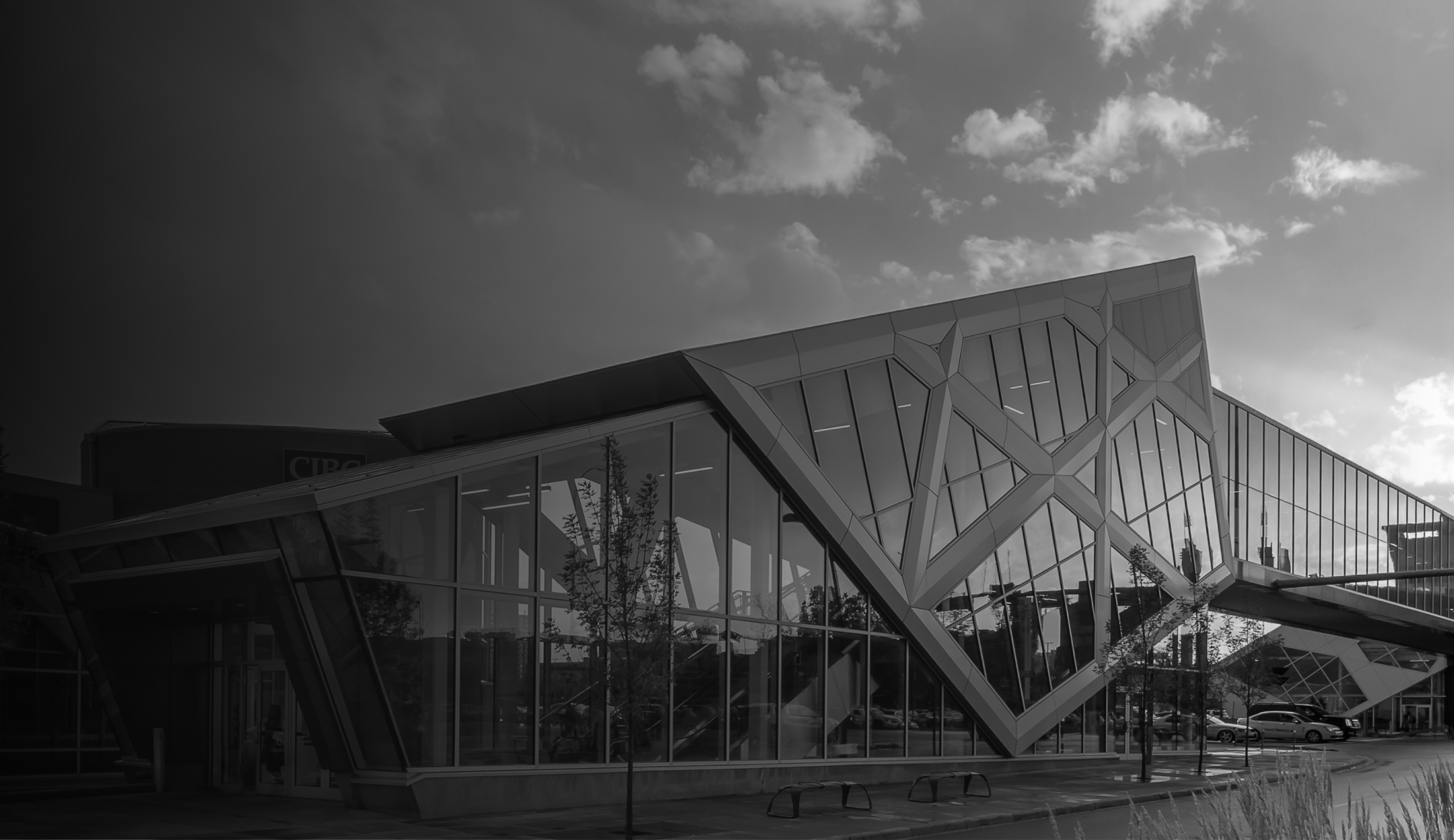
Grant Metal Products has been fabricating custom metal components out of Rocky View County, just outside Calgary, since 1980 — long enough that a meaningful share of its work is on buildings most Calgarians pass every week: the BMO Centre, the Seton community, the Edmonton International Airport control tower, and Chinook Bridge, among others. The shop is ISO 9001-certified and holds a Certificate of Recognition, runs CNC punching, shearing, routing, and brake forming on Prima Power equipment, and keeps a working inventory on hand specifically so a confirmed order can move into production without waiting on a mill run. A robotic storage-and-retrieval system (internally called Night Train) holds finished components until they're needed for assembly, and the shipping bay is built to load semitrailers directly — details that sound minor until you're the one waiting on a delivery.
None of that replaces asking the seven questions above of any fabricator you're considering. It's simply what those questions look like when the answers are all "yes."
Have a project that needs custom metal components fabricated in Alberta? Get in touch with Grant Metal Products to talk through your specs, or see our full capabilities.
Frequently
Asked
Questions
A structural steel contractor builds the load-bearing skeleton of a building — beams, columns, connections. A metal fabricator producing components for construction typically handles non-structural but critical parts: flashing, cladding, back pans, brackets, and custom architectural components. Some shops do both; many specialize in one or the other.
As early as the design development phase, if possible. Once shop drawings are issued for construction, a fabricator can still flag problems, but the cost and schedule impact of a late change goes up significantly. Bringing them in during design lets them influence buildability before it's locked in.
It's rarely a legal requirement, but many general contractors and institutional owners now require it — or strongly prefer it — during subcontractor prequalification, precisely because it provides a documented, auditable quality trail if something goes wrong.
Ask directly whether the delay is a capacity issue, a material sourcing issue, or a documentation issue — the fix is different for each. If the pattern repeats across multiple orders, it's worth requalifying other fabricators even if switching mid-relationship feels inconvenient; a chronic delay has a way of compounding across a project.
You can source from anywhere, but local proximity meaningfully reduces risk on urgent replacement parts, site visits, and shipping logistics — particularly during winter months when transport delays are more common.
See what we’ve made possible.
Learn more about our recent projects.
CHINOOK BRIDGE, calgary